
"The Wretched of the Earth"
Fanon’s work is a defense of true liberation, not of violence. It upholds the right of oppressed people to resist an unjust system. Those who occupy foreign lands have no legitimate claim to defense.
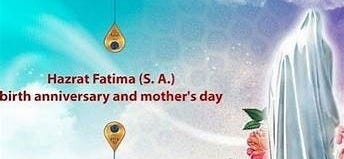
In the midst of the holiday shopping frenzy, it’s important to remember that the most precious things in life aren’t for sale—they’re found in the love of family. Over the past six months, the Angel of Death has journeyed from Dar es Salaam (TZ) to London (UK), Toronto (CA), and Allentown (USA), taking from us elders who were the backbone of our community, as well as cherished mothers and fathers.
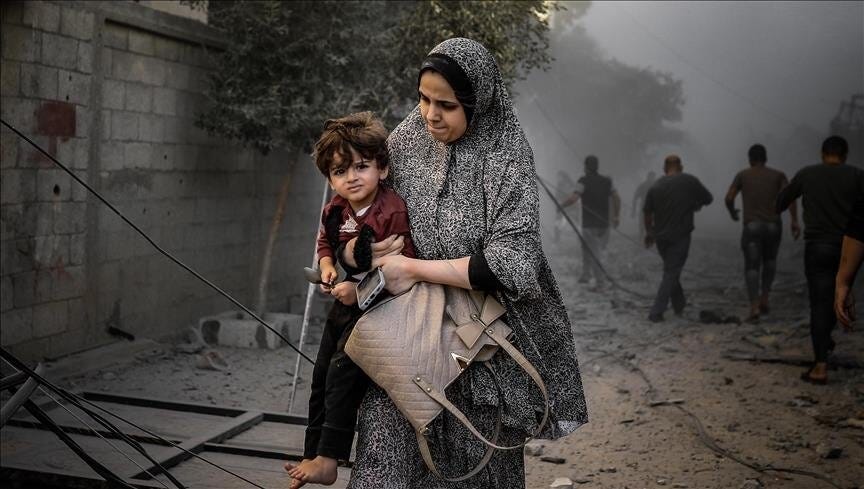
Many in our community are dealing with illness, and we kindly ask for prayers for their speedy and full recovery. Tomorrow, Thursday, Muslims worldwide will celebrate Mother’s Day on Dec. 11. Warm greetings from Allentown on this special day—don’t forget to give flowers to your mothers and kiss them on the forehead.
As we come together with loved ones this season, it’s amazing to think Christmas is just two weeks away, the New Year is three weeks out, and the holy month of Rajab runs from January 3 to February 1, 2026. With fewer than seventy-five days until Ramadan, from February 17 to March 18, 2026, are we really prepared for fasting and spiritual reflection?
Rajab is one of Islam’s four sacred months, dedicated to peace and reflection. It’s a time for increased devotion, prayer, and seeking forgiveness. The month is associated with the Isra and Mi’raj, when the Prophet Muhammad journeyed to heaven Mecca to Al Quds – Jerusalem. It’s also a moment to reflect on the hardships faced by Palestinians under long-standing occupation, nurturing spiritual growth and preparing for the arrival of Ramadan.
Part II Frantz Fanon - The neocolonial trap, revolutionary aspirations, and the moral complexities of liberation, while highlighting his influential works:
The Wretched of the Earth (Grove Press, 1963) and Black Skin, White Masks (Grove Press, 1967).
Fanon’s work can be seen as a clear and deliberate argument for the use of limited colonial violence in the struggle for liberation and freedom.
The growth of self-determination and humanitarian law shows how a dialogue that began with Anglo-Saxon imperialist colonial powers eventually led to the derogatory term “insurgent” under British rule.
Today’s moral rhetoric embraces the idea that people have the right to resist domination, as long as it’s within legal boundaries. The Wretched of the Earth was essential reading for revolutionaries engaged in national liberation movements during the 1960s and ’70s.
It was translated into many languages and received praise from the Black Panthers, African independence movements, Latin American freedom fighters, the Palestine Liberation Organization, and Iran’s Islamic revolutionaries.
For those engaged in national liberation movements, Fanon recognized not only the strategic benefits of achieving peace without violence but also the deep psychological impact it could have.
His perspective was shaped by his work as a psychiatrist, his experience as a colonized Black man, and a lifetime of enduring racism, even after serving in the fight against the Nazis. Black American veterans encountered similar challenges during World War II, the Korean War, and the Vietnam War.
In a 1969 essay, philosopher Jean Améry, a veteran of the Belgian anti-fascist resistance and a Holocaust survivor, noted that Fanon depicted a world he recognized all too well from his experiences in Auschwitz.
Améry suggested that Fanon viewed the violence of the oppressed as a means of reclaiming their dignity, acting as a catalyst that paves the way toward a more humane and historically significant future.
Since the time of slavery, the Global South has been a place where ideas, memories, and resistance constantly flow, clash, and blend. It has been exploited and its people dehumanized, yet its spirit remains unbroken.
Fanon’s influence stretched far beyond Algeria, echoing in Cuba, Nicaragua, Chiapas, South Africa, Mozambique, and throughout the Caribbean. In each of these places, his call to free the mind from colonial thinking sparked and shaped movements for liberation and resistance.
Led by Fidel Castro and Che Guevara, Cuba’s revolutionaries, along with the Islamic Revolution, brought Fanon’s ideas to life, showing that liberation is not only a moral and ethical duty but also a matter of faith and pressing political necessity.
Freedom fighters such as Guevara, Steve Biko, Thomas Sankara, and others inspired by Fanon stressed that revolutionary awareness should come before structural change, and that the oppressed must reclaim their agency to challenge deeply entrenched hierarchies.
Across Africa, the Black freedom and independence movement, driven by leaders such as Steve Biko, Captain Ibrahim Traoré, Patrice Lumumba, Nelson Mandela, Gaddafi, Jomo Kenyatta, Robert Mugabe, and many others, brought Fanon’s vision to life through their actions.
Biko’s belief that “the most potent weapon in the hands of the oppressor is the mind of the oppressed” resonates with Fanon’s focus on psychological freedom as the basis for political liberation, an idea that also played a role in shaping the Islamic revolution.
From the Soweto Uprisings in 1976 to the Iranian student protests of 1979 and today’s student-led demonstrations on U.S. campuses, these movements have challenged Zionist occupation, apartheid, and ethnic cleansing, reflecting the broader fight for human dignity.
Fanon’s vision for practical revolutionary governance included land reform, nationalizing resources, expanding education, addressing wealth inequality, and empowering women—emphasizing that genuine liberation is a holistic process linking culture, economy, and governance.
From Palestinian freedom fighters to figures like Malcolm X, Nelson Mandela, Qassim Soleimani, Iran’s nuclear scientists, and Hassan Nasrallah, their stories reflect the dangers revolutionary leaders face, from internal power struggles fueled by the Western world to external sabotage driven by Zionist imperialist forces.
The struggle in the Global South isn’t just taking place on the ground—it’s also a battle of ideas. After centuries of outside influence shaping and controlling perspectives, breaking free from that hold is key for genuine, lasting freedom to thrive.
Fanon reminds us that every revolution, occupation, and act of civil defiance is a powerful claim to our humanity—a refusal to be silenced. Speak up! Silent no more! This ongoing struggle stands as a living testament to his vision: liberation remains unfinished, yet it is inevitable.
Imam Hussain’s principle in the Battle of Karbala, “Heyhāt Menna Zella,” meaning “Never shall we accept subjugation,” embodies a firm resolve to reject defeat, surrender, or humiliation.
Fanon warned that when political independence is undermined by corruption and the absence of strong institutions, constitutional integrity, trust, honesty, and transparency, sovereign nations can end up functioning like neo-colonies.
Even in democratic systems, millions can still be left on the margins, showing that freedom without social, economic, and cultural reforms doesn’t mean much—a reality evident across Asia, Africa, and South America.
Africa’s abundant mineral wealth is still being exploited, while countless local communities face severe poverty, environmental damage, and displacement. Foreign powers and multinational corporations continue extractive practices reminiscent of colonial-era exploitation, echoing Fanon’s criticism of the postcolonial elite’s complicity.
Latin America offers vivid examples of the clash between grassroots liberation movements and global capitalism, with Bolivia, Venezuela, and Nicaragua standing out. Evo Morales promoted resource sovereignty, Hugo Chávez advanced the Bolivarian revolution, and Nicaragua’s Sandinista efforts all aimed to reclaim their nations from neo-colonial and imperialist influence.
They continue to face challenges like international sanctions, covert efforts to cause instability, regime changes, and financial or economic pressure from the IMF, World Bank, and other global institutions, showing just how relevant Fanon’s warnings still are.
Neocolonialism works not just through military and economic pressure, but also through the spread of ideas, education systems, and media narratives that make global inequalities seem normal. A notable example is the Islamic Republic of Iran, which, despite 47 years of sanctions, regime changes, imposed wars, and a recent 12-day conflict, has repeatedly seen the efforts of Zionist imperial neocons fail.
Masilo Sepala, a dedicated academic with a passion for Pan-African scholarship and social justice, has authored an insightful book and essay. His work dives into liberation theory, anti-imperialist movements, and decolonial practices across Africa and the Global South.
Through his research, teaching, and public outreach, he explores both past and present struggles for freedom, equity, and collective liberation, giving a platform to the voices of the oppressed.
His work explores how theory fuels activism, questions global hierarchies, and strives to create societies rooted in justice, solidarity, and dignity. Social media: X (@MrMmetlwa), TikTok (@ntshilu_sepaela), LinkedIn (Masilo Sepaela).
Echoes of Liberation: Frantz Fanon and the Continuing Anti-Imperialist Struggle in the Global South.
Ethics of Liberation, Decolonial Humanism and Global Solidarity
https://libya360.wordpress.com/2025/11/28/echoes-of-liberation-frantz-fanon-and-the-continuing-anti-imperialist-struggle-in-the-global-south/
Conclusion: The Unfinished Project.
Frantz Fanon’s legacy lives on because true liberation is never entirely finished. Political independence, legal changes, or surface-level progress mean little if people’s minds stay colonized and economies keep exploiting.
He reminds us that true freedom requires both psychological and material transformation. For the oppressed in the Global South, his call still resonates rise, resist, rebuild. Confront foreign imperialism and homegrown neocolonialism alike.
Reclaim dignity, embrace our shared humanity, and commit to collective freedom. The revolution isn’t just history—it’s the living fight for justice, solidarity, and a renewed human spirit. Fanon’s voice still resonates, and it’s on us to answer the call.