The NAKBA
This month, we remember the solemn history of Nakba Day May 15th with a featured film honoring Mohammad Bakri. Rest in peace and thank you for giving voice to resistance and celebrating the humanity.
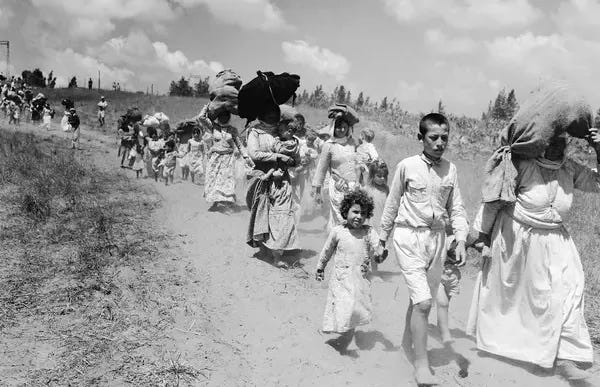
Every year on May 15, people of conscience, including Palestinians worldwide, mark Nakba Day, remembering the 1948 Israeli Arab conflict in Palestine that led to the mass displacement and expulsion of the Palestinian population.
This year, with over three million people displaced and more than 850,000 lives lost, the Nakba—Arabic for “catastrophe”—carries an even deeper significance.
From May 10 to May 15, Nakba Day week will host a range of events and commemorations highlighting the enduring impact of the Nakba on Palestinian society. Here are some key highlights.
Protests, rallies, watching Palestinian documentaries, and acts of remembrance are ways to represent the ongoing fight for confiscated land, a lost homeland, and the right to return.
The Nakba is a major historical event that still shapes the daily lives of Palestinians, many of whom live in refugee camps across the region—often likened to open prisons—without the ability to return to their ancestral homes.
For Palestinians, the Nakba feels like it never ended, as they still face displacement and persecution, with the occupation impacting almost every part of their daily lives.
In Gaza, the situation has been described as genocide, marked by ongoing human rights violations, breaches of international law, and widespread destruction of homes and livelihoods.
Nakba Day week serves as a reminder of the profound historical pain and the ongoing struggles faced by Palestinians, highlighting the need for continued advocacy and action to address these issues.
I’m going to talk about one of the finest Palestinian films, Janin, Jenin: The Legacy of a Camp.
Across the USA, communities are invited to come together at universities, synagogues, churches, Islamic centers, and justice institutes to watch this film.
Check for a local screening near you and help spread the word. Speak Up! Silent No More! is planning to organize the event while considering final exams and end-of-semester schedules, though it’s not certain if it will be possible.
A humble request goes out to Islamic centers and churches to take the lead.
Summary:
I’ll keep the documentary details short, offering just a quick look at the producer and the challenges he encountered while making the two films in 2002 and 2024.
Even after twenty years of relentless pressure from Israeli authorities, director Mohammed Bakri’s documentary “Jenin... Jenin” remains a vivid portrayal of the aftermath of the 2002 invasion of the Jenin refugee camp, capturing the devastation and struggles endured by its residents.
The film ignited legal disputes, with Israeli authorities accusing Bakri of distorting the facts, while the documentary depicted the Israeli Occupying Force (IOF) as disregarding moral and ethical principles, as well as international laws, in its role as an occupying force.
Courts had prohibited its screening and ordered all copies confiscated. Now, in 2026, it feels like history is repeating as the Israeli military launches another harsh offensive, targeting not just the Jenin camp but the entire region.
This documentary is ideal for human rights supporters and those passionate about the Palestinian cause. It’s also a great choice for academics, researchers, and anyone interested in Middle Eastern politics, conflict studies, or history.
For questions about screening this movie contact: https://mad-distribution.film/movies/movie1115601.php
View the Trailer.
“Janin, Jenin” (2024) is a documentary by Mohammad Bakri that captures the ongoing struggles of the camp’s residents, sharing their personal stories of destruction, loss, and resistance.
The film unfolds in four parts: it begins by revisiting the events of the original ‘Jenin, Jenin’, then shifts to the legal battles Bakri has faced for over two decades.
The third part looks back at the history of the Palestinian refugee crisis since 1948, and the final section gives voice to those who lived through the most recent military offensive.
One of Mohammad Bakri’s last projects before his passing was Janin, Jenin, built on the foundation of his 2002 film of the same name.
This work eventually culminated in his recently finished piece, Janin, Jenin (2024).
This time, though, he made sure not to show the face of any IOF soldier, since just a few seconds of one appearing in Jenin, Jenin (2002) had been enough for the military to file a defamation lawsuit against Bakri.
Although Israel’s Supreme Court lifted the original ban on the film in 2003, the lawsuit eventually led to a permanent ban, a large fine, and the seizure of all remaining copies of the work in 2021.
The IOF also blocked Bakri from screening his latest documentary at Jaffa’s Al-Saraya Theatre.
The film begins with the word “Janin (جانين),” meaning fetus or embryonic stage in Arabic, chosen by the director to symbolize the generations of resistance that have grown out of the Jenin refugee camp in response to the ongoing Israeli occupation of the West Bank.
“The camp is our soul, our life, our Intifada,” says a teenage girl, strolling past a row of shattered, bombed-out buildings in one of the opening scenes of *Jenin, Jenin*.
In the documentary, this young girl stands out as a truly unforgettable figure.
She speaks passionately about the unbreakable spirit of the people as they rebuild the camp in the face of ongoing encroachments, showing unwavering determination and making bold revolutionary statements.
Her courage is remarkable—No Compromise, No Retreat! —evoking the memory of the martyrs of Karbala on the Day of Ashura.
In a now-legendary moment, she says, “I want to share something that isn’t about hope or anything like that. But to Israelis, I say, ‘Proud as eagles, we will live. Tall as lions, we will die.’ Let every Israeli remember this.”
The insurgency in Jenin dates back long before it became known as a “refugee camp” for Palestinians displaced from their homeland, and even earlier than the creation of the Zionist state following the 1917 Balfour Declaration.
During the height of the 1936–39 Arab Revolt in Palestine, hundreds of activists openly opposed the British Mandate authorities following the killing of several anti-colonial figures, including Imam Izz ad-Din al-Qassam.
The residents of Jenin, along with the Imam, stood strong against British rule and opposed Zionist efforts to create a Zionist state in the Holy Land for followers of all three Abrahamic religions.
In 1938, the British reacted to the uprising by destroying a quarter of Jenin, a place that has since stood as a symbol of Palestinian resistance. After the 1967 Arab Israeli war, it came under full Israeli control and became one of the most heavily targeted areas by Israeli forces during the First Intifada, from 1987 to 1993.
Jenin became known as the “factory of suicide bombers” due to the IOF’s intense assaults on civilians, especially women and children. Living under constant threat, many felt they had no choice but to resist before Jenin was ethnically cleansed. The same Zionist objective is evident in Gaza.
In Bakri’s interview with a young man, the camp’s legacy is clear when he says, “They wanted to scare us, but instead they made us stronger,” and adds with calm resolve, “Israel is the loser, not the Palestinian people.”
In Bakri’s film, a young man with hearing and speech impairments is brought to life through an overlaid soundtrack, his gestures transforming into sounds that create a haunting effect. Bakri later meets him again in *Janin, Jenin*, where his son has joined a militant resistance group.
The young girl from the 2002 film, later identified by Bakri in interviews as Najwa, makes her return in the sequel, now living outside the camp.
The Palestinian Authority (PA) is often viewed as an unpopular result of the conciliatory Oslo Accords, signed in 1993 between the Palestinian Liberation Organization (PLO) and the occupying force.
Many Palestinian thinkers, including Edward Said, criticized the accords for the PLO’s accommodating approach toward Israel and for abandoning the resistance movement without securing concrete commitments to Palestinian statehood, fair land and resource distribution, or assurances to stop the growth of Israeli settlements.
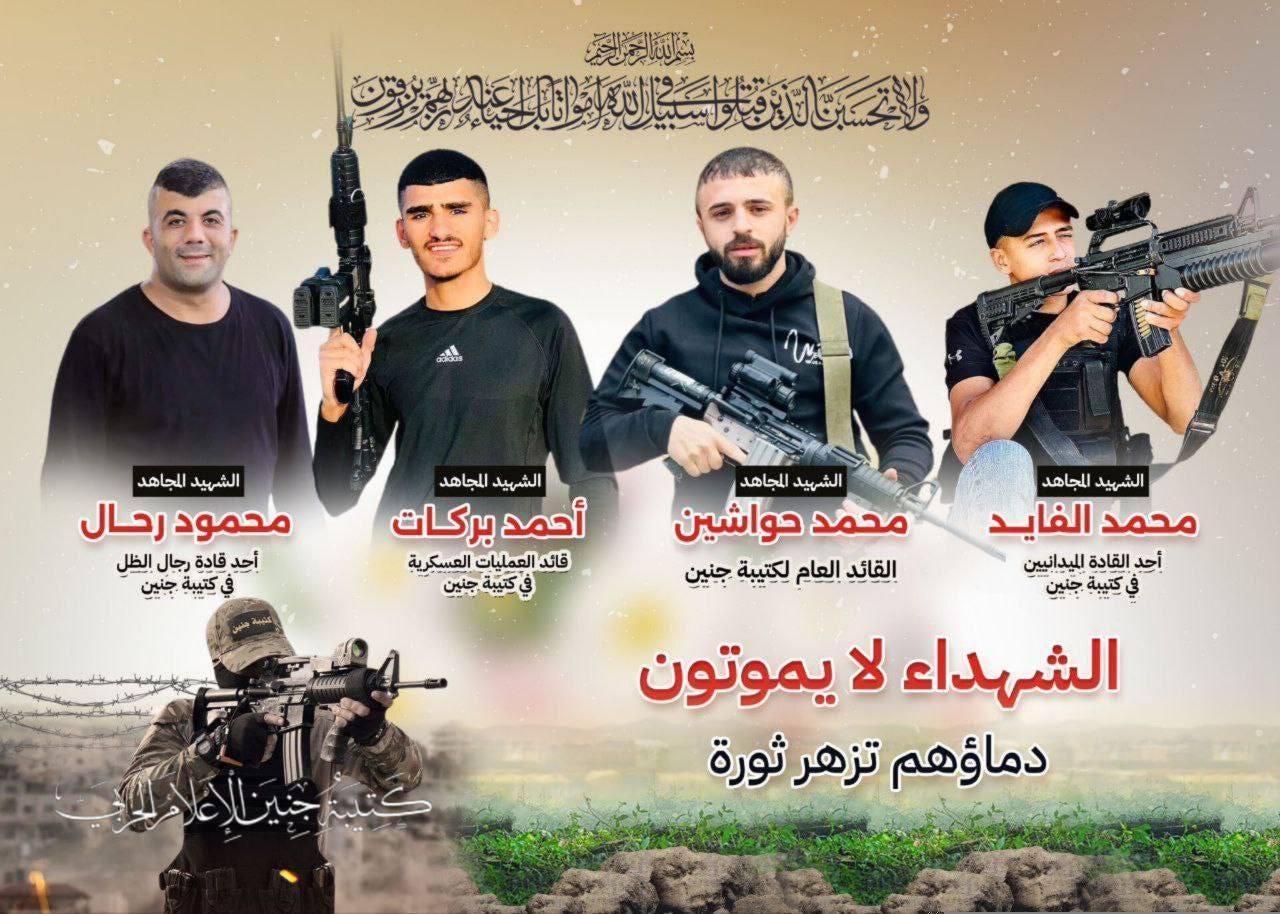
In 2021, the Jenin Brigades emerged, drawing inspiration from figures like Qassim Soleimani, Hassan Nasrallah, and several martyrs from Jenin, including 15-year-old Mahmoud Gharbiya, 28-year-old Mo’min Abu al-Hijaa, 27-year-old Amir Abu al-Hijaa, 34-year-old Hossam Qanouh, 23-year-old Ibrahim Qaneri, and 33-year-old Baha Abu al-Hijaa.
To be continued! The Four Knights of Jenin! Just before sunset, four knights were on their way to break their fast when occupation forces suddenly carried out an airstrike on their vehicle near the edge of Jenin camp—a brutal and cowardly act. The IOF has always failed, for there is no victory in occupation—only in the martyrs, who achieved their wish of ascending during the blessed month of Ramadan.